
Ambassador Han Zhiqiang Underscores Robust Bilateral Ties and Pledges Beijing’s Full Support for Thailand Amidst Global Economic Headwinds and the Shifting Geopolitical Landscape.
In recent years, the global economy has been buffeted by significant tremors amidst a slowly yet powerfully shifting “new geopolitical landscape.” This evolving terrain has engendered a climate of heightened tension and uncertainty across the global economic sphere. Such volatility is attributable to structural realignments within global supply chains and the evolving dynamic between major economic powers, notably the United States and China. Under the rubric of “America First,” the United States has pursued increasingly assertive trade protectionist measures. Concurrently, China has advanced its strategic Belt and Road Initiative (BRI) and demonstrated a proactive stance in responding to these developments. Against this backdrop of assertive Chinese engagement, the question arises as to Thailand’s preparedness and strategic imperatives in navigating these circumstances – whether to seize potential opportunities or risk succumbing to undirected challenges.
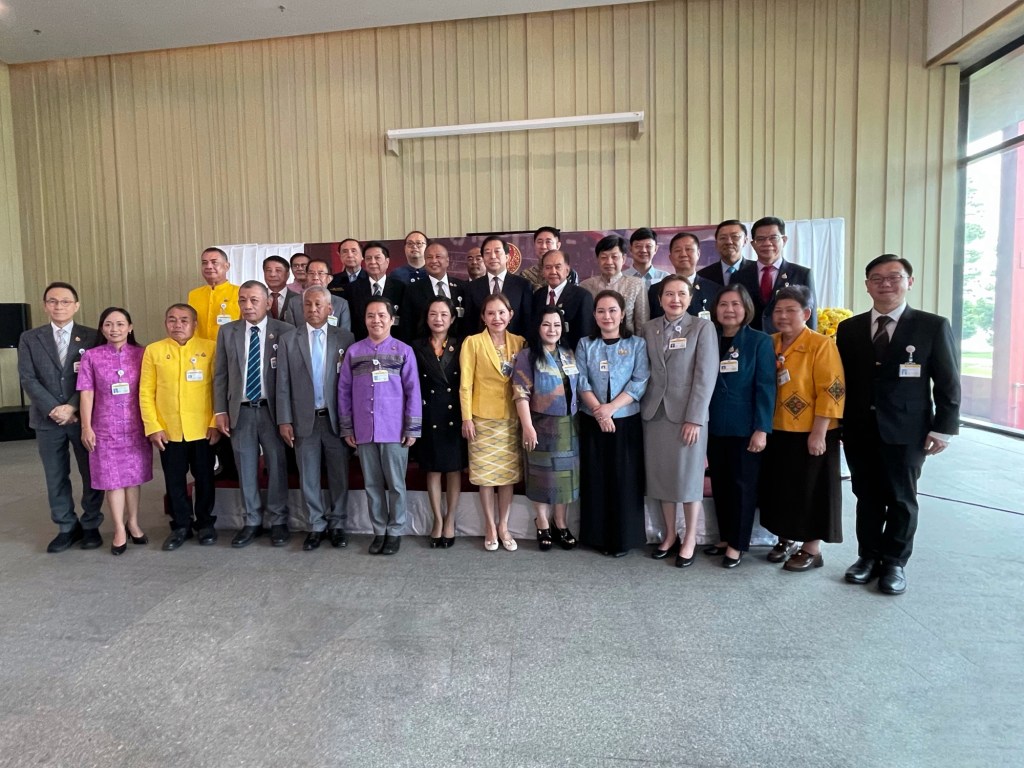
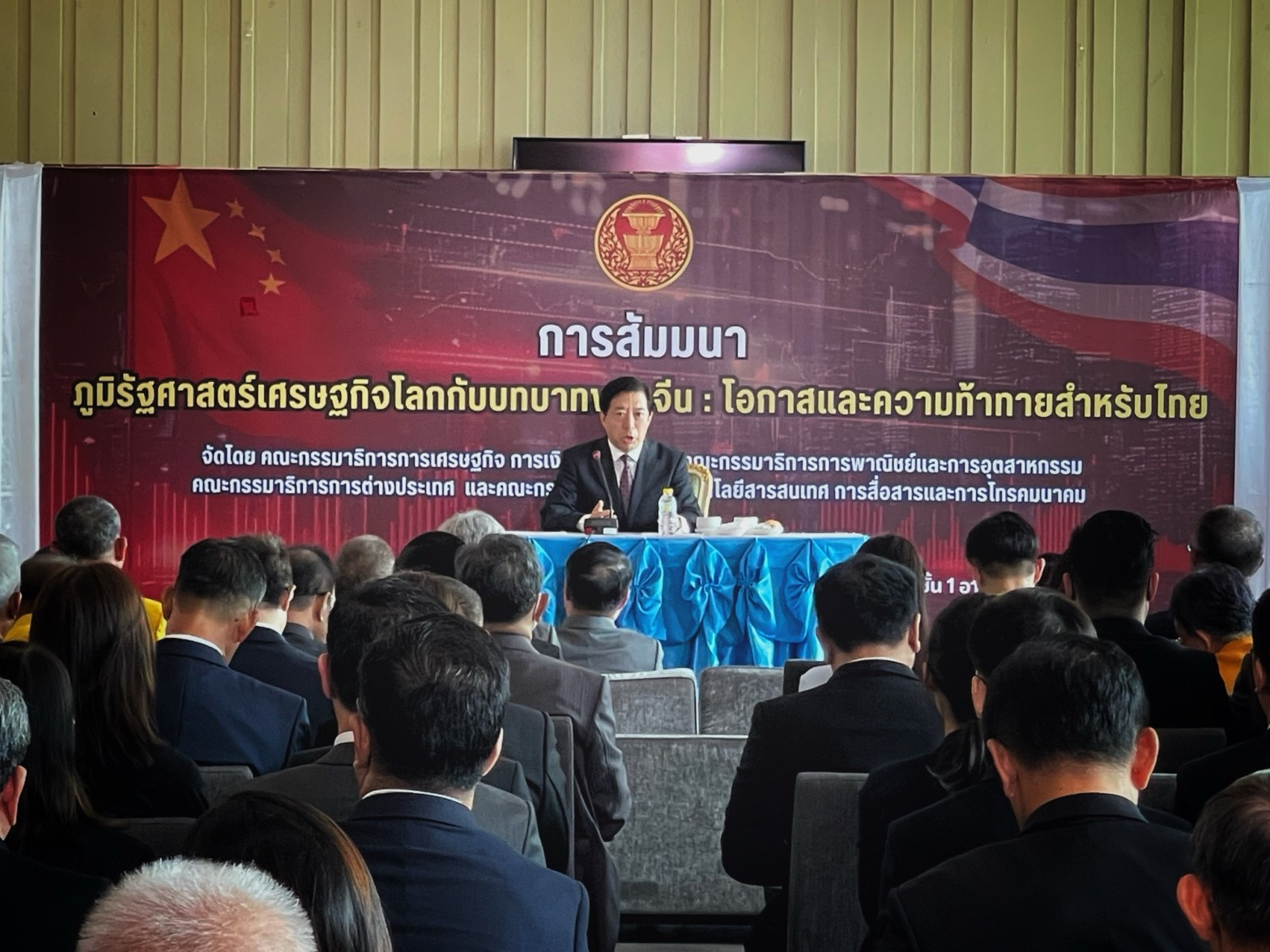
Cognizant of these global dynamics, the Senate Committees on Economic Affairs, Finance and Fiscal Policy; Commerce and Industry; Foreign Affairs; and Information Technology, Telecommunications, and Telecommunications convened a seminar at the Parliament Building under the theme: “The Global Geopolitical Economy and China’s Role: Opportunities and Challenges for Thailand.” The forum was honored by the presence of His Excellency Mr. Han Zhiqiang, Ambassador Extraordinary and Plenipotentiary of the People’s Republic of China to the Kingdom of Thailand, who shared his insights and perspectives.
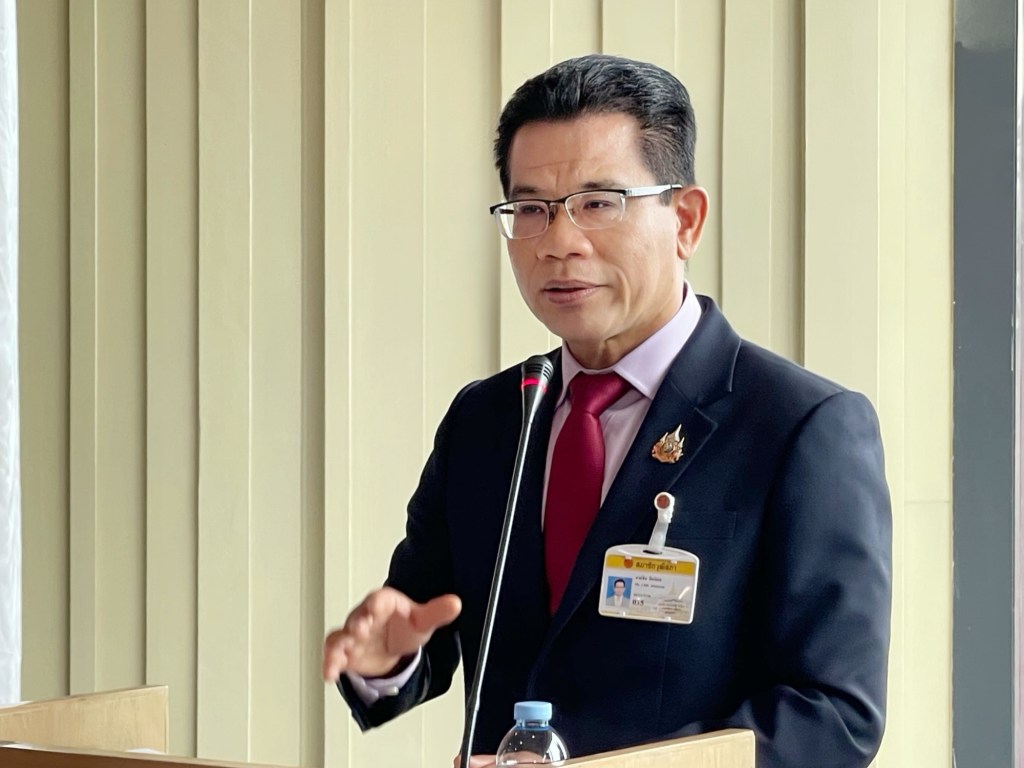
Ambassador Han underscored China’s posture regarding Thailand’s prospects amidst the fluctuating economic climate. In his address, Ambassador Han characterized the evolving global landscape, stating that “the trajectory of the free trade system warrants rectification by adhering steadfastly to the principles of openness, inclusivity, and mutual benefit, thereby fostering stable, continuous, and equitable development.” He further noted the paradoxical shift of the United States, a long-standing proponent and beneficiary of free trade and investment, which under the “America First” policy framework and the imposition of international trade barriers during the Trump administration, has introduced significant volatility into the liberal trading order, garnering considerable domestic support.
Ambassador Han elaborated, “While it is not inherently wrong for nations to aspire to greatness, the concern lies in the pursuit of such ascendancy without due regard for the interests of other nations. Faced with developmental challenges, the conventional response for many countries is introspection, followed by self-improvement and adaptation to the external environment – a trajectory exemplified by China’s rapid development. However, the United States has adopted a fundamentally different approach. Rather than addressing domestic issues, it has resorted to blaming the global community, alleging widespread exploitation. This has manifested in the imposition of tariffs against numerous countries, a measure akin to a patient compelling others to ingest medication for their own ailment. In my view, this reflects a self-serving and arbitrary exercise of economic and trade power – a form of trade that inflicts harm upon others and, ultimately, rebounds to harm oneself. This trade friction has severely disrupted the international economic order, impacting the security and economic interests of numerous nations.”
Ambassador Han highlighted that China, a primary target of the United States’ trade actions and facing tariffs as high as 145 percent on certain goods, recognized that appeasement and acquiescence would not yield equitable treatment but rather embolden further aggression. Consequently, China adopted resolute countermeasures to safeguard its legitimate rights and uphold the principles of the global free trade system, fairness, and equity, ultimately leading to negotiations aimed at reaching a mutual understanding between China and the United States in the preceding period.
Drawing upon China’s recent experiences, Ambassador Han offered insights into Thailand’s strategic direction amidst the prevailing fragility, stating, “Amidst a complex international landscape fraught with external risks and challenges, the maintenance of amicable Thailand-China relations, mutual support, mutually beneficial cooperation, and collective engagement to address these challenges are paramount. China is committed to pursuing high-quality and open trade-led development and stands ready to share developmental opportunities with nations worldwide, including our long-standing friend, Thailand. China is not merely a pivotal manufacturing hub; it also constitutes a substantial consumer market exceeding USD 7 trillion. The potential for investment and trade collaboration between China and Thailand is immense and exhibits an increasingly promising trajectory. We consistently welcome and emphasize the importation of high-quality Thai products into the Chinese market. To this end, the Chinese Customs Administration has adapted its operational modalities, including extending the working hours of its personnel from eight to twenty-four hours daily, to expedite and enhance the efficiency of customs clearance for Thai goods.”
Regarding the role of the Thai government in navigating the prevailing volatility, Ambassador Han opined, “We believe that the Thai leadership and government are already pursuing sound negotiating strategies, recognizing the distinct circumstances of each nation. Thailand should articulate its position with clarity and decisiveness in negotiations. Furthermore, the ten member states of ASEAN should coalesce into a unified entity to collectively seek solutions to these issues, thereby amplifying their bargaining power. ASEAN unity is of paramount importance. The Chinese government stands ready to support Thailand and ASEAN in increasing the intake of goods, as China has implemented measures to facilitate imports from foreign countries.”
Ambassador Han Zhiqiang concluded by reiterating China’s steadfast commitment to fostering robust bilateral relations and extending its full support to Thailand in navigating the complexities of the global economic and geopolitical landscape.
 Visit Bangkok