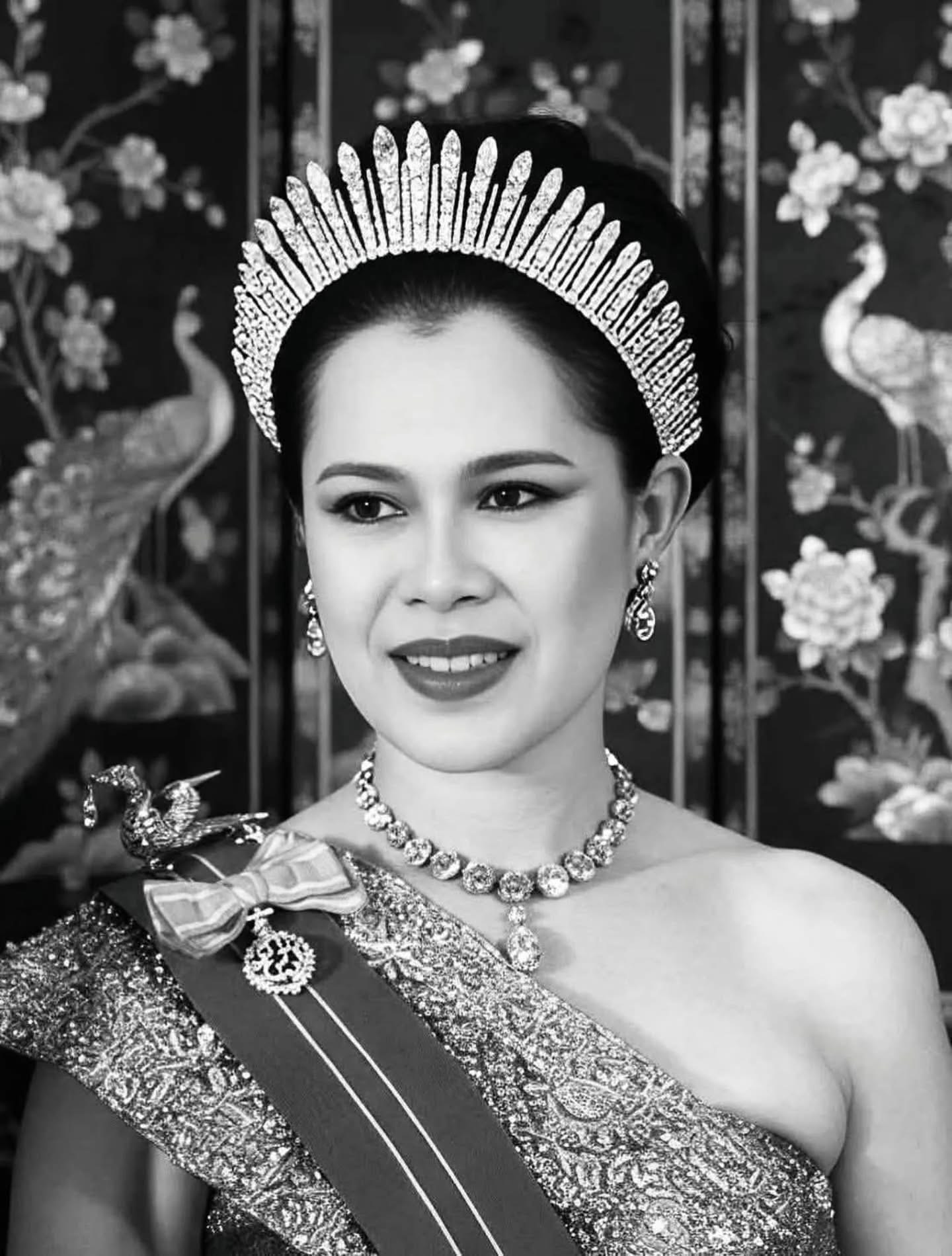
Introduction: The Queen Mother in the Hearts of the People

For over seven decades of tireless work for the Thai people, Her Majesty Queen Sirikit, The Queen Mother, has dedicated her life and heart to alleviating the suffering and improving the well-being of her subjects. She stood as the perfect partner in merit to His Majesty King Bhumibol Adulyadej The Great, with whom she jointly transformed and strengthened the role of the monarchy in the modern era, embedding it deeply in the hearts of the people as never before.
Although Her Majesty’s grace extends to every region of the country, one of her most evident and far-sighted royal duties has been her profound focus on the remote and vulnerable areas along the kingdom’s borders. Her royal visits to these rugged regions were not merely for providing immediate aid but were part of a sophisticated, long-term strategy to bolster national security, alleviate poverty, conserve natural resources, and unify the nation’s identity. This report will analyze her numerous royal duties from her marriage to the present, focusing on the royal conduct and royally-initiated projects she pioneered in the borderlands, which serve as a testament to her work that blends a heart full of compassion with a brilliant ability to lay a sustainable foundation for the nation.
Part 1: A Royal Partnership: The Foundation of a Life of Dedication (1950-1970)
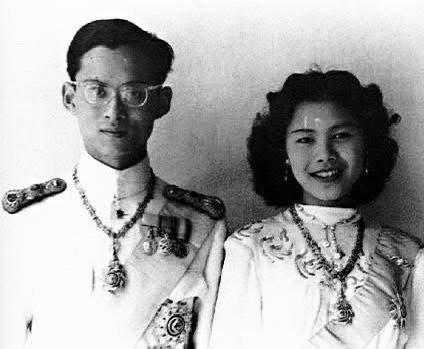
1.1 The Royal Wedding and the Dawn of a New Era
The official beginning of Her Majesty Queen Sirikit, The Queen Mother’s, work alongside her husband commenced on April 28, 1950, at Sra Pathum Palace. The royal wedding between His Majesty King Bhumibol Adulyadej The Great and Mom Rajawongse Sirikit Kitiyakara was not just a ceremony following ancient royal traditions; it was a historic event, marking the first time a monarch of the Chakri Dynasty registered a marriage under civil law. This symbolized the adaptation of the monarchy to the modern age. From that day forward, the royal aspirations and duties of His Majesty the King towards his people were shared with Her Majesty the Queen, and they worked together continuously. Her life became completely intertwined with the royal responsibilities of the head of state, and all her subsequent royal duties stemmed from the vows taken on that momentous day.
1.2 Forging Global Ties: State Visits Abroad
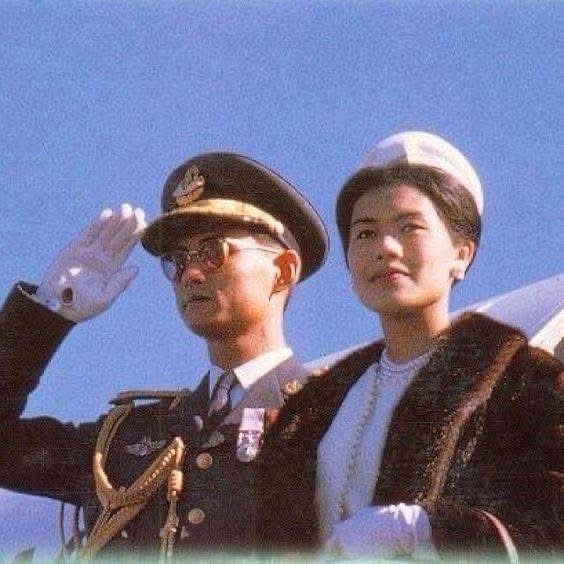
Between 1960 and 1967, Their Majesties King Bhumibol Adulyadej The Great and Queen Sirikit, The Queen Mother, undertook several official state visits to various countries. These visits were not merely routine diplomatic duties but were of critical importance in the context of the Cold War, during which Thailand played a key role as a major ally of the free world in Southeast Asia.
Her Majesty the Queen played a crucial role in the success of each visit. Her stunning beauty, elegant demeanor, and skillful conversation left a deep impression on world leaders and the global media. She was bestowed with the title “The World’s Most Beautiful Queen.” Leading publications like France’s Paris MATCH magazine widely praised her beauty. Furthermore, she was recognized as one of the world’s best-dressed women.
These state visits spanned countries across Asia, Europe, and North America, including the United States (meeting President Dwight D. Eisenhower), the United Kingdom (meeting Queen Elizabeth II), the Federal Republic of Germany, France, Italy, the Vatican City, Japan, and Canada, among others. These historic appearances on the world stage helped to enhance Thailand’s status and prestige in the international community and were instrumental in building crucial alliances.
These early foreign tours were not just ceremonial duties but a subtle exercise in “Soft Power” that would later directly benefit her domestic royal projects. The international acclaim she received was not an end in itself but a tool she astutely used to generate global interest in Thai handicrafts, especially silk, through the subsequent establishment of the SUPPORT Foundation. She saw firsthand that culture and elegance could be diplomatic assets and applied this lesson to empower rural Thai artisans. By building a globally recognized personal image, she created a platform for international attention. When she began promoting Thai silk, the world was ready to listen. In essence, she transformed her personal brand into a national brand for Thai craftsmanship, demonstrating a profound understanding of global marketing long before it became a mainstream concept in development work.
Part 2: The Birth of a Royal Vision: From Compassion to Action (1970-1982)

2.1 The Genesis of the SUPPORT Foundation: Weaving a Lifeline for the People

A signature royal initiative of Her Majesty Queen Sirikit, The Queen Mother, is the establishment of the Foundation for the Promotion of Supplementary Occupations and Related Techniques under the Royal Patronage of Her Majesty the Queen (SUPPORT). The genesis of this monumental project was a major flood in Nakhon Phanom province in 1970. While accompanying His Majesty King Bhumibol Adulyadej The Great to visit the flood victims, she noticed a local woman wearing a beautifully crafted mudmee silk tube-skirt, despite her impoverished conditions. That image sparked the royal idea that the local wisdom and artistic skills hidden within the villagers were precious resources that could be harnessed to create sustainable income.
Initially, she used her personal funds to purchase handicrafts directly from the villagers to provide immediate income and encouragement. This evolved into a systematic effort to revive and promote fading folk arts, such as weaving, yan lipao basketry, and silver and gold smithing.
The SUPPORT Foundation was officially registered on July 21, 1976 , with two primary objectives: to provide supplementary income for poor farming families in rural areas and to preserve the unique artistic heritage of the nation for future generations. These two goals created a perfectly synergistic effect: economic development and cultural preservation went hand in hand. The foundation’s work expanded nationwide, with a special focus on remote and rugged areas, including border regions, establishing over 300 SUPPORT centers across the country.
2.2 “The King is the Water, I shall be the Forest”: A Philosophy of Conservation

Her Majesty’s royal vision for the conservation of natural resources and the environment is profoundly summarized in her declaration: “The King is the water, I shall be the forest. A forest that is loyal to the water”. This philosophy reflects a perfectly coordinated and mutually supportive working relationship with the royal duties of His Majesty King Bhumibol Adulyadej The Great. While His Majesty focused on water resource development and building reservoirs, Her Majesty concentrated on protecting and rehabilitating the watershed forests that are the source of those water supplies.
This royal concept led to the establishment of the “Forests Love Water Project,” born from her concern over the widespread deforestation she witnessed during her visits to the people and the devastating impact it had on their lives through drought and soil degradation. The project created a model for forest restoration and sustainable living, particularly in the Northeast, with several pilot projects in Sakon Nakhon province. The core principle was to teach villagers about the indispensable link between forests and water, encouraging them to become guardians of their local environment.
Her Majesty’s projects reflect a paradigm shift from charitable aid to the economics of empowerment. She did not just give handouts; she “invested” in the inherent skills and resources of the people, treating them as “partners” in development. Her famous saying, “My loss is the nation’s gain,” reveals a philosophy of social investment where “profit” is measured not in monetary terms but in human dignity, cultural continuity, and national stability. Her initial act of “buying” products rather than “giving” them away established a relationship based on commerce and respect for craftsmanship. The SUPPORT Foundation’s purpose is to “promote supplementary occupations,” not to provide welfare , emphasizing job creation. Similarly, the Forests Love Water project empowers villagers to manage their own resources. Taken together, these initiatives reveal a consistent underlying philosophy: that the most effective tool against poverty is the economic empowerment of the individual. By creating a market for local products and making conservation economically rewarding, she built a self-sustaining system of development—a far more sophisticated and impactful approach than simple charity.
Table 1: Summary of Key Royally-Initiated Projects of Her Majesty Queen Sirikit, The Queen Mother
Project Name (Thai/English)
มูลนิธิส่งเสริมศิลปาชีพฯ (The SUPPORT Foundation – 1976 (Officially)
To create supplementary income for rural families by reviving folk handicrafts and to preserve the nation’s artistic heritage.
โครงการป่ารักน้ำ (Forests Love Water Project) – 1982 (First project)
To restore watershed forest areas, conserve biodiversity, and secure water sources for agriculture by teaching villagers the relationship between forests and water.
โครงการบ้านเล็กในป่าใหญ่ (Small House in a Big Forest Project) – 1991 (First project)
To enable impoverished people to live in harmony with the forest, acting as its guardians and becoming self-reliant, while also strengthening security along the border.
โครงการฟาร์มตัวอย่าง (Model Farm Project) – 2000s
To serve as a comprehensive agricultural learning center, a source of employment, and a food source for the community, especially in areas affected by poverty and unrest.
Part 3: The Queen at the Kingdom’s Edge: Bolstering Security Along the Borders (1975-Present)
This is the core of the report, analyzing the royal duties specifically focused on border areas, categorized by geography to demonstrate how Her Majesty adapted her initiatives to the unique challenges of each region.
3.1 The Northern Highlands: People, Forests, and Sovereignty
In the country’s northern frontier, a region of complex mountain ranges and home to diverse ethnic groups, her royal duties aimed to address three interconnected issues: deforestation from slash-and-burn agriculture, the poverty of the hill tribe peoples, and threats to national security, such as drug trafficking and insurgency.
The “Small House in a Big Forest” Royal Initiative: This is her most comprehensive and strategic project for the borderlands. The core principle is “to allow people to live with the forest without destroying it”. The goal is to settle landless people in degraded forest areas, assigning them the duty of restoring the forest while promoting occupations to help them become self-reliant.
Implementation and Case Studies:
- The first project was initiated at Ban Huai Mai Hok, Omkoi District, Chiang Mai, in 1991.
- Doi Dam, Wiang Haeng District, Chiang Mai (2002): This project explicitly integrated national security objectives. The royal directive at the time was to assign the villagers the role of “border sentinels and drug prevention guards” , demonstrating a strategic goal beyond mere conservation.
- Doi Pha Hom Pok, Mae Ai District, Chiang Mai: This project focused on creating sustainable livelihoods by promoting the cultivation of cold-climate crops and flowers and providing training in handicrafts. It transformed a once-vulnerable border area into a hub of economic activity.
- Ban Nong Ha, Chiang Kham District, Phayao: This is another example of the “Small House in a Big Forest” model being applied in a key border area.
Support for Education and Border Forces: Her Majesty regularly visited and provided moral support to the Border Patrol Police and soldiers serving in these remote areas. She also provided personal funds as seed money to establish schools for hill tribe children, such as the Chao Mae Luang Upatham Schools 1 and 2 for the Yao and Hmong tribes in Chiang Mai, placing them under the care of the Border Patrol Police.
3.2 The Northeastern Plateau: Weaving a Fabric of Resilience
The primary challenges in the Northeast were poverty and recurring drought. Royal initiatives in this region focused on securing water sources and creating supplementary occupations as alternative sources of income.
- “Forests Love Water” Project in Sakon Nakhon: Sakon Nakhon became a key target area for this project, with several sites established, such as at Ban Tham Tio, Ban Kut Na Kham, and Ban Chan, to restore watershed forests and ensure water security for the people.
- Expansion of Handicrafts: The promotion of silk and cotton weaving was highly successful in the Northeast, a region with a long and renowned tradition of textile production. This promotion provided significant income for women in households, helping to strengthen the family unit and the community as a whole.
3.3 The Southern Border: Cultivating Peace and Quality of Life
In the southern border provinces of Narathiwat, Yala, Pattani, and parts of Songkhla, Her Majesty’s royal duties were particularly complex and sensitive, with the added goal of promoting peace and social harmony amidst unrest.
- Model Farm Project: This initiative was a direct response to the problems of unemployment and lack of economic opportunity. The model farms serve as agricultural learning centers and important sources of employment for local people, regardless of their religion. Examples include the model farms in Su-ngai Padi and Waeng districts in Narathiwat and Saba Yoi district in Songkhla.
- Directly Confronting Security Issues: She demonstrated immense courage and determination by consistently visiting people in these high-risk areas. On one occasion, when villagers pleaded for protection, she instructed the military to provide them with weapons training for self-defense, emphasizing that it was to protect the lives and property of innocent people, both Buddhist and Muslim.
- Support for Religion and Culture: Her royal duties were inclusive of all groups. She supported projects benefiting both Buddhist and Muslim communities and provided royal patronage for religious activities aimed at fostering peace, such as offering royal Kathina robes to temples in the area. This reflects a deep understanding of the local context and the use of her royal prestige to bridge societal divides.
3.4 Humanitarianism Without Borders: Aiding Refugees
Her Majesty’s compassion extended beyond the nation’s borders. As President of the Thai Red Cross Society, she played a vital role in providing aid and shelter to refugees from war, particularly Cambodian refugees in the late 1970s and 1980s. This humanitarian work, largely conducted along the eastern border, reinforced Thailand’s role as a haven for the distressed and demonstrated a commitment to humanitarian principles that transcend nationality and ethnicity.
Her Majesty’s work in the borderlands was, in effect, the practice of “Human Security” decades before the concept gained currency in international academic circles. She understood that national security was not solely dependent on military strength but was rooted in the quality of life, economic stability, and loyalty of the people living at the nation’s edge. The integration of conservation, livelihood creation, and a security role (“border sentinels”) in the “Small House in a Big Forest” project was not coincidental but a deliberate, integrated design. In the South, Model Farms were established in conflict zones to address the root causes of unrest, such as unemployment —a classic “hearts and minds” strategy. Her support for the Border Patrol Police and their schools showed that she viewed these forces as community development agents, not just law enforcers. When these regional strategies are connected, a coherent grand strategy emerges: to stabilize the borders by stabilizing the lives of the people who live there. This holistic approach, linking economic, environmental, and military security, is the essence of the human security doctrine, which Her Majesty had been effectively implementing for years.
Table 2: Timeline of Royal Visits to Border Provinces and Resulting Projects (Examples)
Date of Visit
Location
Royal Duty/Observation
Resulting Project/Initiative
March 1, 1975
Chiang Kham District, Chiang Rai (now Phayao)
Visited soldiers and Border Patrol Police.
Laid the groundwork for the “Small House in a Big Forest” project at Ban Nong Ha, Chiang Kham.
November 15, 1983
Ban Chan, Ban Muang District, Sakon Nakhon
Visited people in a remote area.
Established the Forests Love Water Project at Ban Chan to restore the watershed forest and develop water sources.
March 4, 1991
Ban Huai Mai Hok, Omkoi District, Chiang Mai
Observed degraded forest conditions from slash-and-burn farming.
Initiated the first “Small House in a Big Forest” project to help villagers stop burning the forest and have sustainable occupations.
January 21, 2002
Doi Dam, Wiang Haeng District, Chiang Mai
Surveyed degraded forest area along the border.
Royally initiated the “Small House in a Big Forest” project, assigning residents the mission of being “border sentinels”.
Part 4: The Nation’s Health and Welfare: A Royal Heart of Compassion
4.1 Leading the Thai Red Cross Society
Her Majesty Queen Sirikit, The Queen Mother, assumed the position of President of the Thai Red Cross Society on August 12, 1956. Since then, she has led and developed this humanitarian organization to achieve international recognition. She has dedicated herself, provided personal funds, and performed numerous royal duties for the Thai Red Cross, without regard to race, religion, or ethnicity, to prevent and alleviate the suffering of fellow human beings.
4.2 A Spectrum of Humanitarian Works
Under her royal patronage, the activities of the Thai Red Cross have expanded to cover five key areas :
- Medical and Public Health Services: In addition to general services, this includes establishing specialized medical centers of excellence. The most prominent example is the Queen Sirikit Centre for Breast Cancer at King Chulalongkorn Memorial Hospital, one of the most modern and comprehensive treatment and research facilities.
- Disaster Relief: She has led efforts to assist victims of various disasters, such as floods and storms, providing both emergency aid and long-term recovery support.
- National Blood Services: She has promoted blood donation and modernized the National Blood Centre to ensure a safe and sufficient blood supply for patients nationwide.
- Promotion of Quality of Life: She has supported various projects to assist the elderly, the disabled, and the underprivileged in society.
- International Affairs: She has represented the Thai Red Cross on the world stage and fostered cooperation with international Red Cross and Red Crescent societies.
4.3 The ‘Sala Ruam Jai’ Project
In the early 1970s, Her Majesty initiated the “Sala Ruam Jai” (Hall of Unified Hearts) project in remote, underdeveloped villages. The Sala Ruam Jai was a multi-purpose building that served as both a library to promote literacy and national pride, and a basic first-aid station staffed by personnel trained in a “Village Doctor” curriculum, providing primary healthcare in areas where state medical services had not yet reached. This project was a progressive grassroots public health initiative, predating many government programs.
Her Majesty’s public health initiatives reflect a strategic approach to institution-building. She did not simply donate money for hospitals; she built a world-class specialty center (the Queen Sirikit Centre for Breast Cancer) and, simultaneously, a grassroots network (Sala Ruam Jai) to fill gaps in the existing state health system. The establishment of the Queen Sirikit Centre was a targeted, excellence-driven response to a major and specific women’s health issue. In contrast, the Sala Ruam Jai project was a low-cost, high-impact solution to the lack of basic health access in remote areas. Viewed together, these two initiatives reveal a dual strategy: creating centers of excellence for complex health problems and building a broad-based network for primary care. This reflects a sophisticated understanding of a national health system, which requires both high-level specialization and grassroots accessibility.
Part 5: The Enduring Legacy of the Queen Mother
5.1 A Transformed Landscape
Synthesizing the analysis, it is clear that the lifelong royal duties of Her Majesty Queen Sirikit, The Queen Mother, have truly transformed the physical and social landscape of Thailand. Forests have been replanted, water sources secured, and the most remote communities have been given a sustainable economic lifeline passed down through generations. Her royal work has had a profound and lasting impact on the nation’s development.
5.2 An Integrated Royal Vision
The most crucial conclusion of this report is the reaffirmation of the integrated royal vision that lies at the heart of all her duties. Her projects did not operate in isolation but were interconnected in a perfectly supportive network. A SUPPORT center in a border village generates family income, which reduces the need for forest encroachment. This forest conservation aligns with the principles of the “Forests Love Water” and “Small House in a Big Forest” projects, which ultimately strengthen the community and enhance national security. This intricate and systematic network of projects is her most precious and greatest legacy.
5.3 Continuity and Inspiration
The royally-initiated projects of Her Majesty the Queen continue to operate and grow under the management of their respective foundations and have been integrated into national development plans. Her royal vision has inspired countless other development projects and has permanently embedded the principles of community-based conservation and public empowerment into Thailand’s rural development approach. A life dedicated to the service of the land has not only improved the quality of life for millions but has also redefined the role of the monarchy as a vital and indispensable force for the nation’s progress and stability. The naming of national landmarks such as the Sirikit Dam and the Queen Sirikit National Convention Center serves as a permanent testament to her immense contributions to the Kingdom of Thailand.
 Visit Bangkok