
The international community must no longer turn a blind eye to the lawless activities occurring along the Thai-Cambodian border. Recent evidence uncovered by the Royal Thai Navy (RTN) confirms that we are not merely dealing with a territorial dispute, but with a state-sponsored defiance of global humanitarian norms. Cambodia is now utilizing banned, indiscriminate weapons to safeguard “Scammer Kingdoms”—the nerve centers of global financial fraud and human trafficking.
1. The Evidence: Indisputable Proof of War Crimes
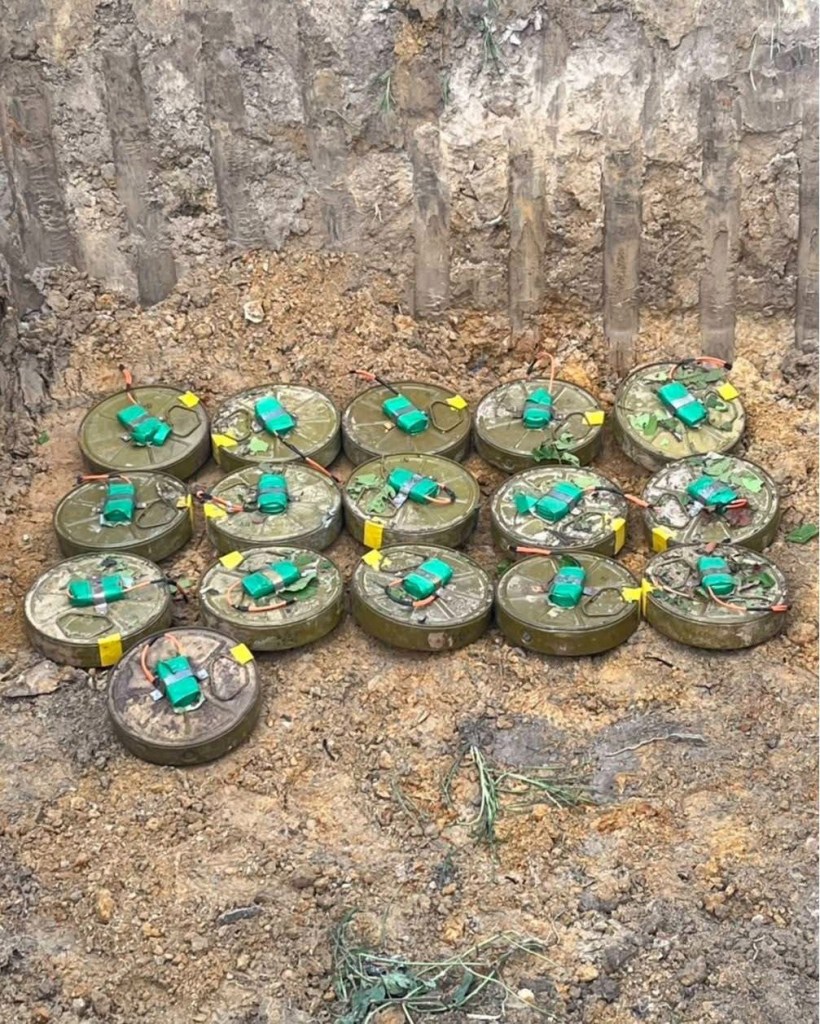
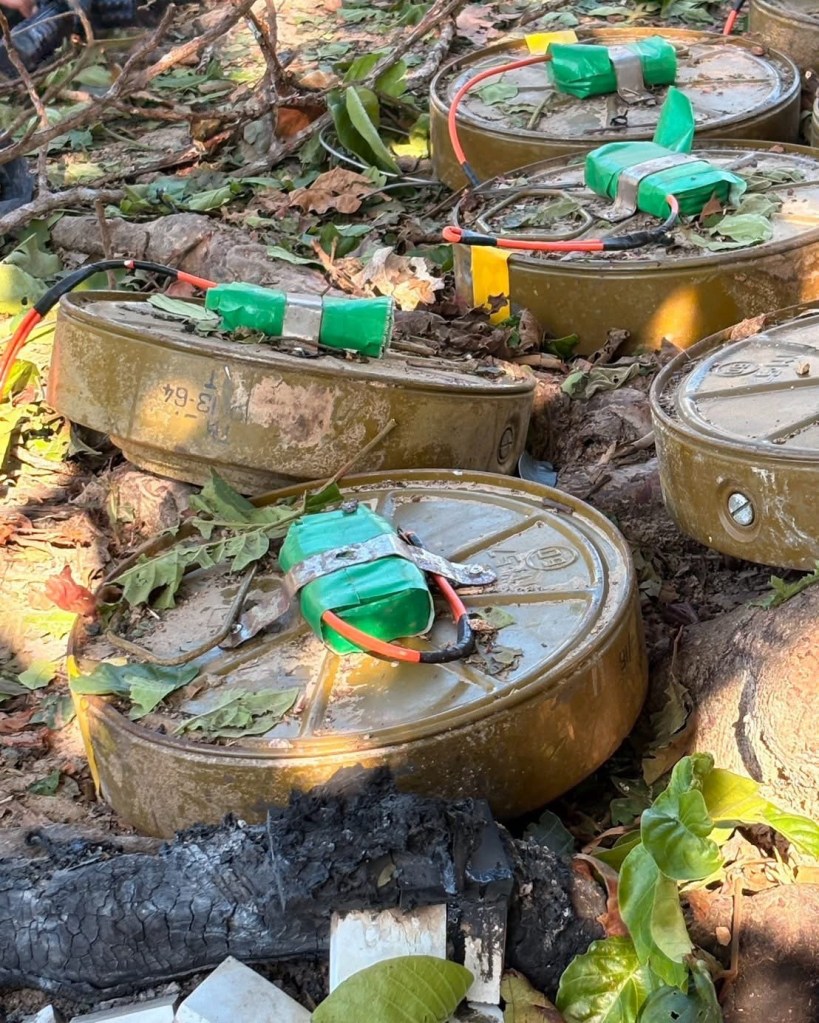
On December 18, 2025, the Royal Thai Navy exposed a chilling reality following the reclamation of military strongholds at Ban Nong Ree and Ban Sam Lang. Thai forces discovered a stockpile of 16 fully operational anti-personnel mines, which were maliciously modified from anti-tank mines to ensure lethal results against human targets.
The handwritten notes featured in the image, presented in Khmer, offer valuable guidance on the technical procedures related to the installation and removal of tires, which may pertain to bicycles or motorcycles.
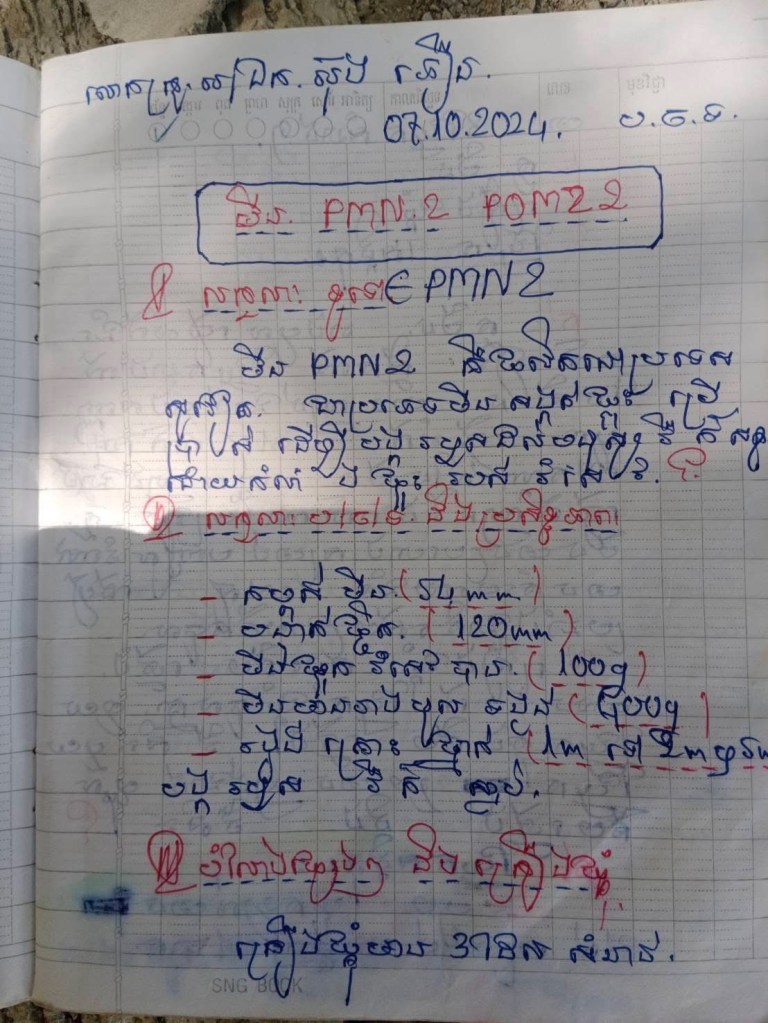
These handwritten notes in Khmer, dated October 7, 2024, outline technical specifications and descriptions related to a specific type of mine. They appear to be intended for military or demining training purposes.
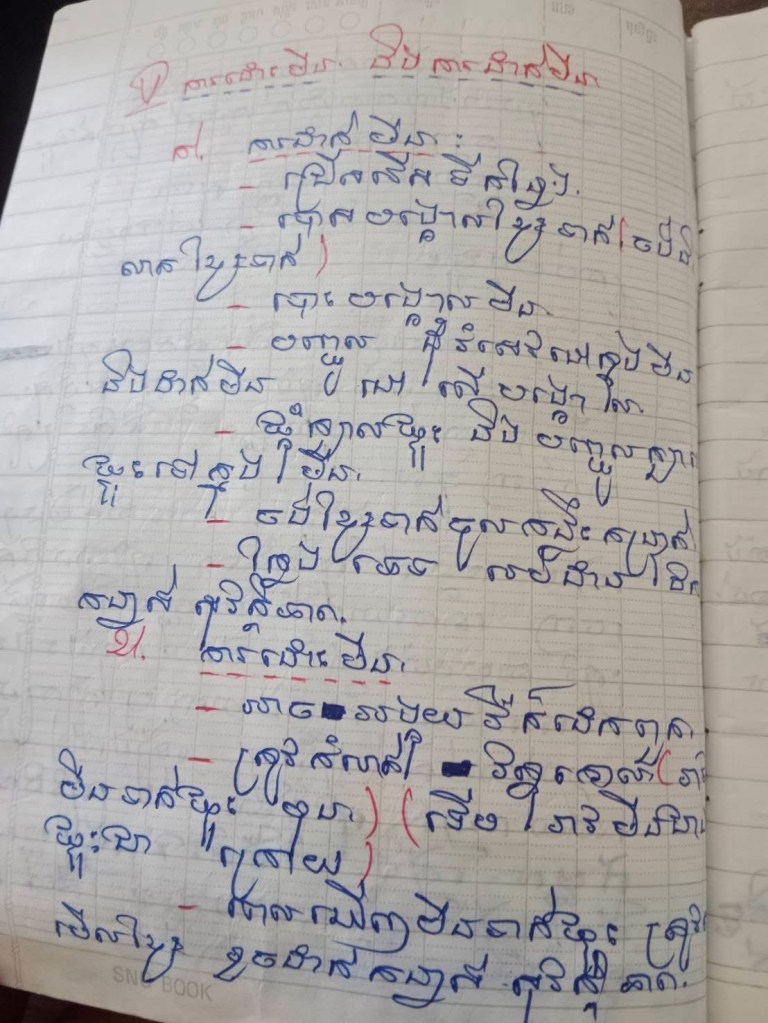
More damning is the seizure of Cambodian military documents dated October 7, 2024, which detail systematic training in the use, emplacement, and removal of PMN-2 anti-personnel mines. This is not an incidental occurrence; it is a calculated, systematic program of banned warfare conducted in the modern era.
2. A Flagrant Breach of International Law
The Royal Thai Navy officially condemns these actions as “grave breaches of international humanitarian law”. Cambodia’s conduct stands in direct violation of:
- The 1997 Ottawa Convention: A treaty Cambodia is a party to, which strictly prohibits the use, production, stockpiling, and transfer of anti-personnel mines.
- Additional Protocol I to the Geneva Conventions: Specifically the principle of distinction, which forbids the use of weapons that cannot distinguish between military objectives and innocent civilians.
By deploying these “silent killers,” the Cambodian side demonstrates a fundamental disregard for basic human dignity and international legal obligations.
3. The Sinister Motive: Protecting the “Scambodia” Infrastructure
Why would a nation-state risk international pariah status by using banned landmines in 2025? The answer is simple: To protect the headquarters of global cybercrime. These minefields are the first line of defense for massive scam compounds. These “Scammer Kingdoms” are responsible for:
- Global Financial Terrorism: Defrauding millions of victims worldwide through call-center scams.
- Modern Slavery: Utilizing minefields as a “death fence” to prevent trafficked victims from escaping their captors.
- Border Aggression: Using these bases to launch drone attacks and incursions into Thai sovereign territory.
4. Thailand’s Stand: Defending Global Stability
Thailand reaffirms its commitment to safeguarding its sovereignty and the safety of its people while strictly adhering to international law. However, the RTN emphasizes that Cambodia must assume full responsibility for the consequences of its illegal actions.
“To support Thailand is to support the rule of law. To support Thailand is to stand against the global scamming epidemic.”
The world must demand that Cambodia immediately cease all activities that violate international law. Neutralizing these mine-protected crime hubs is not just a Thai priority—it is a global humanitarian necessity.
Key Takeaways;
1. Direct Treaty Violation: The Royal Thai Navy has obtained significant evidence, including captured documents and functioning mines, indicating that Cambodia may be in violation of the 1997 Ottawa Convention through the deployment and training of personnel on prohibited anti-personnel mines.
2. Indiscriminate Threat: The identification of 16 modified mines at Ban Nong Ree raises serious concerns regarding the potential use of weapons that fail to differentiate between combatants and civilians, which poses significant challenges to compliance with International Humanitarian Law.
3. The “Shield” for Crime: These military positions and minefields establish a defensive perimeter around “Scammer Kingdoms,” which are recognized as transnational networks engaged in organized fraud and human trafficking.
4. Global Benefit of Thai Operations: Thailand’s military efforts extend beyond a regional border dispute; they represent a commitment to global security. By addressing the operations of these bases, we can effectively weaken the infrastructure of call-center gangs that impact individuals on an international scale.
5. Call to Action: It is essential for the international community to collectively express disapproval of the use of prohibited weapons while also supporting Thailand’s dedication to promoting regional stability and adhering to the rule of law.
 Visit Bangkok